


Reporter: Pat Fernandez
MEDAN, Jan 2026 — The Tamil community in Indonesia may be smaller than its counterparts in Malaysia or Singapore, but its history is no less rich. Rooted in colonial migration and sustained by cultural resilience, Tamils in Indonesia continue to preserve their identity while adapting to the realities of modern Indonesian society.
📖 Historical Roots
Tamil connections with the Indonesian archipelago stretch back centuries. Traders from South India sailed across the Bay of Bengal, exchanging textiles, spices, and ideas with kingdoms in Sumatra and Java. These early contacts laid the foundation for later migration.
The largest wave came in the 19th century under Dutch colonial rule, when thousands of Tamil laborers were brought to Medan, North Sumatra, to work on tobacco and rubber plantations. Many stayed after their contracts ended, forming permanent settlements. Over time, they established temples, schools, and cultural organizations, ensuring that Tamil traditions remained alive far from their homeland.
📍 Where They Live
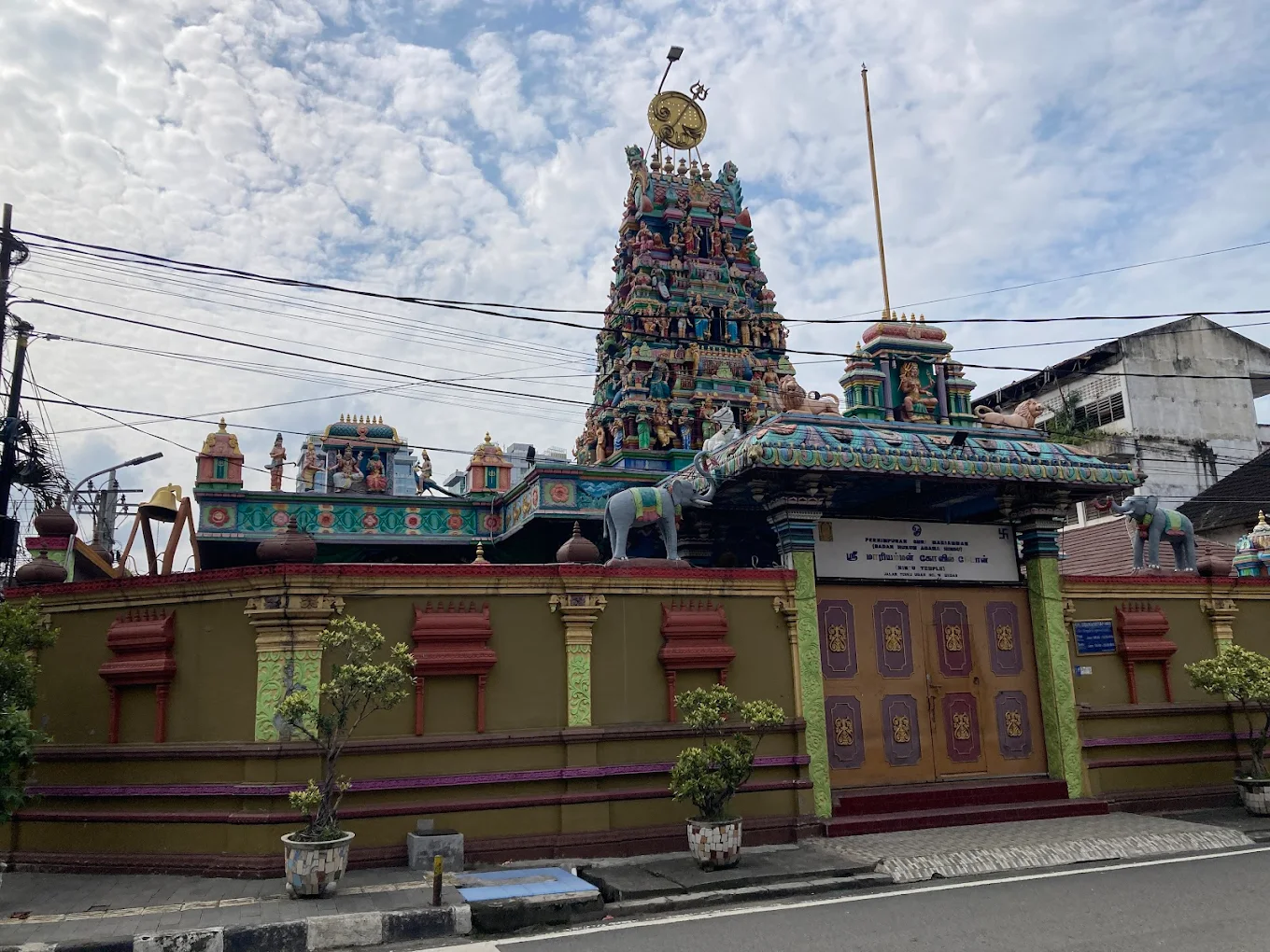
Today, the Tamil population in Indonesia is estimated at 40,000–75,000, with the majority concentrated in Medan. Smaller communities exist in Jakarta, Aceh, Riau, Bali, Palembang, and Surabaya. Medan remains the cultural heart, home to the Sri Mariamman Temple, Tamil schools, and community halls that host festivals and gatherings.
The Indian Embassy in Medan also records around 25,000 Indian expatriates, including Tamils, who contribute to the city’s cosmopolitan character.
🕉️ Religion and Culture
Religion plays a central role in Tamil identity in Indonesia. Most Tamils are Hindus, with temples serving as cultural hubs. The Sri Mariamman Temple in Medan, built in 1884, remains one of the most prominent Hindu temples in Southeast Asia.
Festivals such as Deepavali and Thaipusam are celebrated with processions, music, and traditional rituals, often drawing participation from the wider Indian Indonesian community. A minority of Tamils practice Christianity, Islam, or Buddhism, reflecting Indonesia’s pluralism.
Language is another marker of identity. While Tamil is spoken at home and in temples, younger generations increasingly use Indonesian in daily life. English is also common among professionals. This shift raises concerns about language preservation, though cultural organizations continue to promote Tamil literacy through classes and events.
🌍 Integration and Identity
Tamils in Indonesia have integrated peacefully into local society. Many are active in business, education, and politics, contributing to Indonesia’s multicultural identity. In Medan, Tamil traders are well known in textile and jewelry markets, while Tamil professionals thrive in law, medicine, and academia.
Despite assimilation pressures, the community has maintained a distinct identity. Temples, cultural associations, and Tamil schools act as anchors, ensuring traditions are passed down. At the same time, Tamils embrace Indonesian national identity, participating fully in civic life.

📉 Challenges Facing the Community
Like many diasporas, Tamils in Indonesia face challenges:
• Language Preservation: Younger generations often prefer Indonesian, leading to declining Tamil literacy.
• Assimilation Pressures: Intermarriage and urban migration dilute cultural practices.
• Limited Visibility: Compared to Malaysia or Singapore, Tamils in Indonesia are less visible in national discourse, raising concerns about representation.
Community leaders stress the importance of balancing integration with cultural preservation. Without active efforts, Tamil identity risks fading over time.
🔑 Opportunities for Renewal
Despite challenges, there are opportunities to strengthen Tamil identity in Indonesia:
• Bilingual Education: Integrating Tamil with Indonesian and English to ensure relevance.
• Digital Platforms: Using apps, online classes, and social media to engage youth.
• Cultural Exchange: Collaborating with Tamil communities in Malaysia, Singapore, and India to share resources.
• Entrepreneurship: Encouraging Tamil youth to apply cultural knowledge in creative industries, from media to tourism.
These strategies could help sustain Tamil heritage while equipping younger generations for success in modern Indonesia.
🌟 Success Stories
The Tamil community has produced notable figures in Indonesia. Tamil entrepreneurs in Medan’s textile markets are renowned for their business acumen. Tamil academics and professionals contribute to universities and hospitals, while cultural leaders ensure festivals remain vibrant.
One example is the annual Thaipusam festival in Medan, which attracts thousands of devotees and tourists. The colorful procession, featuring kavadi bearers and traditional music, showcases Tamil devotion while enriching Indonesia’s cultural diversity.
🧭 Looking Ahead
The future of Tamils in Indonesia depends on striking a balance between heritage and progress. Leaders emphasize that preserving Tamil culture is not about resisting change, but about ensuring diversity remains a strength in Indonesia’s multicultural landscape.
Parents, educators, and policymakers must work together to create pathways where Tamil identity is celebrated, while also equipping youth with the skills needed for global success. As one community leader in Medan noted, “We are proud Indonesians, but we are also proud Tamils. Our challenge is to keep both identities alive.”
✍️ Conclusion
The Tamil community in Indonesia is small but resilient. Rooted in plantation history, enriched by centuries of trade, and sustained by cultural pride, Tamils continue to contribute to Indonesia’s social fabric.
While challenges such as declining language use and assimilation pressures loom, opportunities for renewal abound. Through education, digital engagement, and cultural exchange, Tamils in Indonesia can ensure their heritage remains a living force — not just a memory — in the decades ahead.